

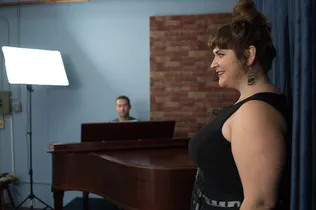
Find out where your voice belongs and select the songs that showcase your best performance.
Discover how participating in community theater helps children boost creativity, bravery, and academic performance.
Vocal range is crucial for audition success and vocal health. Our range indicator helps singers choose songs that showcase their voice at its best, ensuring confidence and preventing strain during performances.

Each voice type has unique characteristics and is suited for different roles. These ranges are guidelines—individual voices may vary, especially for young performers.
Treble Voices
Marian
The Music Man
Jenna
Waitress
Oolie
City of Angels
Bass voices
Evan Hansen
Dear Evan Hansen
Jimmy
Thoroughly Modern Millie
Scar
The Lion King
See how vocal ranges map onto a piano keyboard. Click the examples below to visualize different voice types and understand where notes fall in relation to each other.
Find clear, practical guides covering vocal technique, audition prep, and musical theatre essentials — all created to help you grow as a performer.

Singing within your comfortable range prevents vocal strain and injury. This is especially important for young, developing voices that need protection during their growth.

Choosing strong songs for a rep book starts with finding material that reflects your essence and feels believable for your age and experience. The best audition songs are ones you love, connect with deeply, and can perform truthfully, even if they are popular, iconic, or commonly overdone.

Recording Studios
James Morgan Studio, New York, NYGreen Room, Harrisburg, PA
Dauphin Street Sound, Mobile, ALMixing Room Studios, Omaha, NECybersound, Boston, MA